In the process of getting admission into a premier MBA college, written tests such as CAT, XAT, NMAT, or SNAP may provide the entry point – but it is the Personal Interview (PI) that actually holds the key to who gets to pass through the door. A Personal Interview is not merely a question-answer session; it is an overall assessment of the candidate’s personality, thought process, communication skills, career goals, and emotional maturity. While entrance tests assess your aptitude, Personal Interviews test you – your story, your choices, your awareness, and your ability to perform under pressure.
For MBA hopefuls, the PI round is usually the most unpredictable and nerve-wracking phase. Unlike entrance tests, where the syllabus is well-defined, Personal Interviews can go anywhere – from academics to current events, work experience, hobbies, ethics, or even situational testing. But one comforting fact is that there are some basic questions that almost all MBA aspirants need to prepare for. These questions are asked in all IIMs, best private B-schools, and international MBA colleges because they help the interviewer assess the candidate beyond their academic performance and scores.
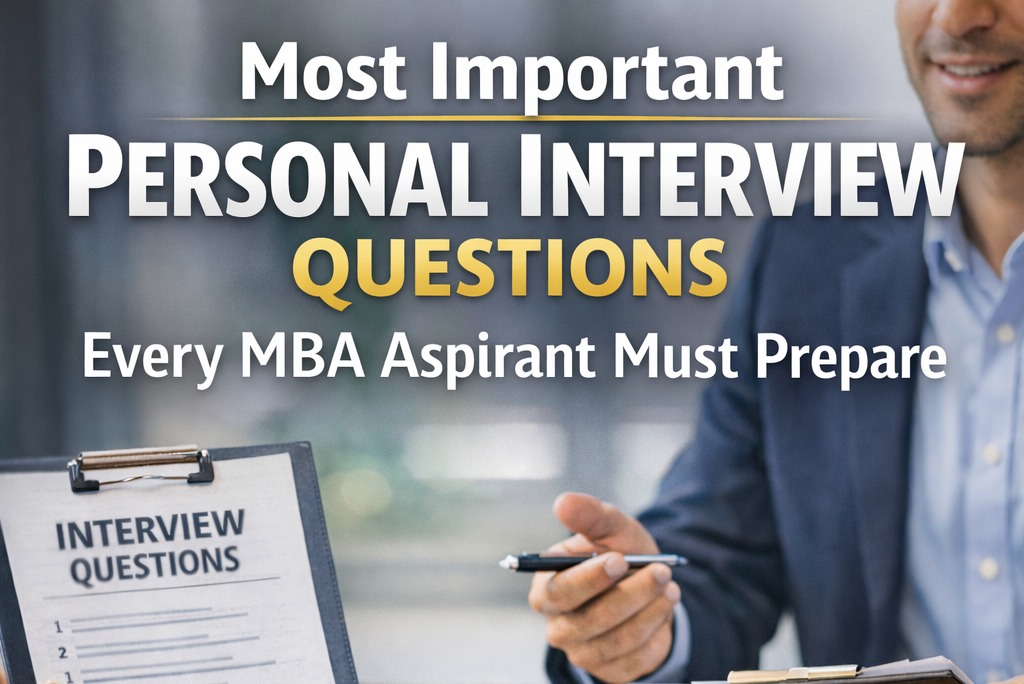
Most Important Personal Interview Questions Every MBA Aspirant Must Prepare
Personal Interview Preparation for PI questions is not about learning the answers; it is about creating clarity. Personal interview panels are experienced enough to recognize the answers that have been memorized. What they look for is authenticity, organization in thoughts, and confidence in delivery. By preparing the most critical PI questions in advance, you can overcome nervousness, work on articulation, and create a compelling story about yourself and why you qualify to be a part of a highly competitive MBA program.
The other critical element of PI preparation is self-awareness. Most candidates prepare well for technical or current events questions but fail to prepare for questions related to themselves, such as their strengths, weaknesses, motivations, and career objectives. The truth is that self-related questions are the building blocks of most MBA interviews. The panel is looking to assess if you are aware of your own journey, choices, and future plans.
In this blog, we will discuss the most critical Personal Interview questions that every MBA candidate needs to prepare. These are not just common questions; they are also foundation questions that determine the entire course of the Personal Interview. Learning these questions can help you perform much better in the interview.
1. Tell us something about yourself.
HINT – Should include background, academics, achievements, interests and career goals.
2. Why MBA?
HINT – Should connect past experiences with present skills and future goals.
3. What are your strengths?
HINT – Mention your strengths with examples.
4. What are your weaknesses?
HINT – Mention your weaknesses with honesty but improving.
5. What is your greatest achievement?
HINT – Achievement that shows impact, initiative or growth and explains it briefly.
6. Where do you envision yourself five years from now?
HINT – Test vision and planning ability. Should show ambition and realism.
7. What are your short-term goals?
HINT – State a realistic, skill-focused goal that aligns with your direction for the next 2-3 years.
8. What are your long-term goals?
HINT – State a vision-driven goal that shows leadership, industry impact and how you aim to create long-term value through your career.
9. Why do you want to join this College/B-school?
HINT – Show specific research by linking the college’s curriculum, faculty, opportunities, or values directly to your career goals and learning needs.
10. Why do you think we should give you admission in our college?
HINT – Highlight your unique strengths, growth mindset, and how you will add value to the college community while making the most of its opportunities.
11. Which specialization do you think you might choose to pursue?
HINT – Identify the specialization that suits you best and indicate your familiarity with it.
12. Why this particular program?
HINT – Link the program’s unique format, curriculum, and learning outcomes to the skills and career path you want to develop.
13. What are your hobbies and interests?
HINT – Identify your actual hobbies that embody good qualities such as discipline, creativity, and teamwork, and be prepared to elaborate on them.
14. Who is your role model?
HINT – Identify a role model whose values and accomplishments actually inspire you, and relate their qualities to your own goals and activities.
15. How do you handle criticism?
HINT – Indicate that you are open to criticism and learn from it, and that you use criticism as a learning tool.
16. What have you learned from your failures?
HINT – Indicate that you have learned to be resilient and self-aware, and that you have learned valuable lessons from your failures that have helped you to improve your performance.
17. Talk about a time when you were a leader.
HINT – Talk about a time when you demonstrated initiative, led a team, and accomplished goals, demonstrating your leadership qualities, decision-making, and problem-solving abilities.
18. What are some of the newspaper headlines that caught your attention?
HINT – Talk about some of the current headlines that are relevant to your knowledge of business, economy, or social issues, and be prepared to discuss your insightful thoughts on these headlines.
19. Do you want to ask or know anything (about the college)?
HINT – Ask a relevant question about the college’s programs, opportunities, or culture that reflects your genuine interest and alignment with your goals.
IMPORTANT WRITER’S TIP : –
- Develop knowledge of current affairs and business awareness.
- Always state problems – show struggles – provide solutions (USE STAR METHOD), it comes very naturally and professionally.
The Personal Interview, in essence, is not about having perfect answers or memorized definitions—it is about you. It is a dialogue where the panel is earnestly attempting to grasp your experience, your decisions, your setbacks, and your dreams.
Each question posed is an opportunity to narrate your story with sincerity and conviction. Remember, nobody is expecting you to have all the answers. What matters most is your awareness, your clarity of thought, and your willingness to be yourself. By embracing your strengths with humility and your weaknesses with maturity, you are already exhibiting the mindset of a prospective manager.
Preparation is important—but authenticity is even more so. The more you think about these PI questions, the better you will understand yourself. And when you understand yourself well, answers become second nature, confidence becomes effortless, and nervousness becomes quiet conviction. Go for your interview not to impress but to express.
Trust your journey, your experiences, and your voice. Because at the end of the day, the best interviews don’t choose the most flawless candidates—they choose the ones who are aware, honest, and ready to grow.